SensorTower vs. AppsFlyer: A Complete Comparison
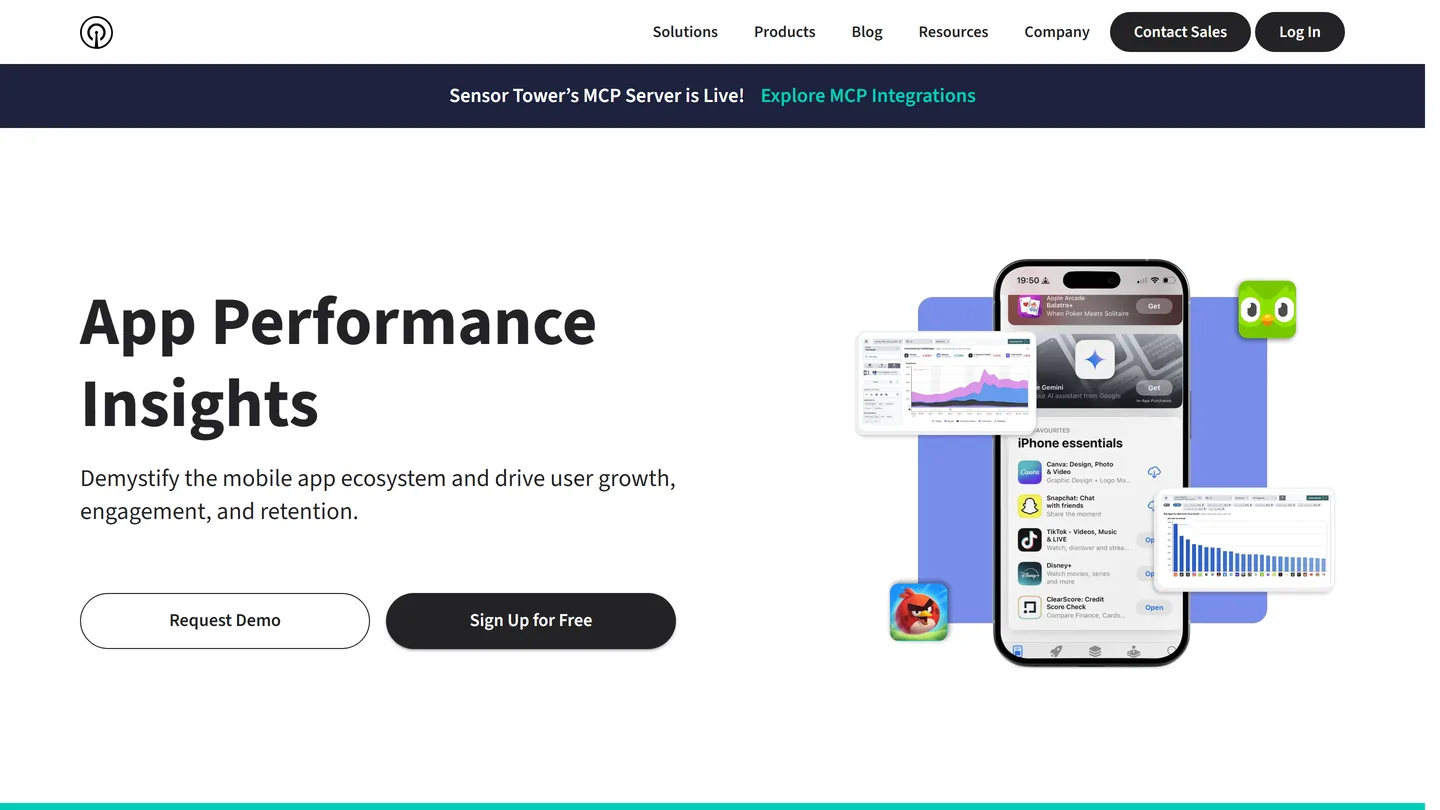
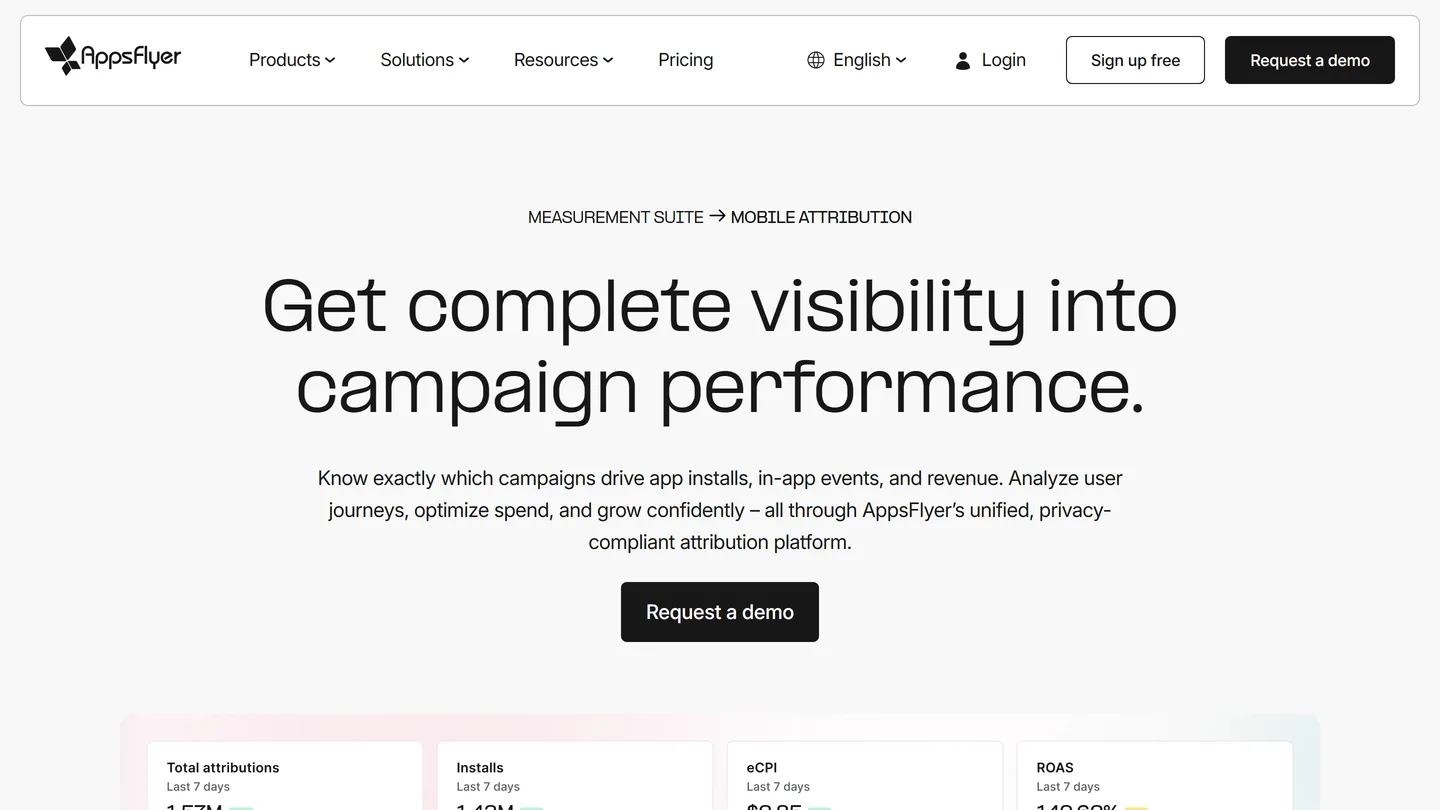
Sensor Tower and AppsFlyer solve different problems, so this is not a head-to-head choice. Sensor Tower is a market intelligence and ASO platform (download and revenue estimates, keywords, competitor ad creatives), and since acquiring data.ai in 2024 it is the dominant player in that category. AppsFlyer is a Mobile Measurement Partner (MMP) built for ad attribution, campaign analytics, deep linking, and fraud prevention. Many growth teams use both: Sensor Tower for research, AppsFlyer for measurement.
Two Different Categories: Market Intelligence vs. Attribution
Sensor Tower is an app market intelligence and ASO platform: download and revenue estimates, keyword rankings, and competitor ad spend and creatives. AppsFlyer is a Mobile Measurement Partner (MMP) specializing in ad attribution, campaign analytics, deep linking, and fraud prevention. One tells you what the market is doing; the other tells you what your own campaigns actually delivered.
The market intelligence side consolidated in March 2024, when Sensor Tower acquired data.ai (formerly App Annie) and folded its main rival’s datasets into the platform.
Below we compare their features, pricing, reviews and pros/cons from the perspective of a small-to-midsize (SMB) marketing agency.
1. Feature Comparison
| Feature/Capability | Sensor Tower | AppsFlyer |
|---|---|---|
| Core Focus | App store market intelligence & ASO | Mobile ad attribution & analytics |
| App Attribution | No built-in attribution | Yes - multi-touch attribution |
| App Analytics (Performance) | App Store / Google Play data | Campaign & user analytics |
| ASO & Store Optimization | Yes | No |
| Competitive Intelligence | Yes | Limited |
| Advertising Intelligence | Yes | Indirect |
| Deep Linking & Routing | No | Yes |
| Fraud Prevention | None | Yes |
| Integrations | API & Data Feeds | Extensive Ad Network & Tech Integrations |
| Platform/Billing | Enterprise SaaS (custom quote) | SaaS with free, pay-as-you-go and enterprise tiers |
2. Pricing (as of August 2026)
-
Sensor Tower: No published pricing; enterprise quotes only. Sensor Tower is known as a high-end platform, and since absorbing data.ai in 2024 it faces little direct competition at that tier. User feedback and independent reports note it is quite expensive and generally aimed at large budgets. For example, Capterra reviewers say “Sensor Tower is a really expensive mobile growth tool…individual and small app developers can’t afford that price” and that it’s “not for small teams” (only big enterprises can afford it). In practice, SMB agencies need to request a demo/quote: there is no free or entry-level plan.
-
AppsFlyer: Flexible tiering for SMB. As of August 2026, AppsFlyer publishes a free Zero plan (for owned-media, organic measurement) and a pay-as-you-go Growth plan for paid campaigns. Both come with a Welcome Package: the first 12K conversions free for the first year, core marketing analytics, and 30 days of select premium add-ons. On Growth, conversions beyond the free 12K are billed at $0.07 each, with no monthly minimum. An Enterprise plan with custom pricing unlocks the advanced modules (full deep linking suite, Protect360 fraud protection, SKAdNetwork and AdAttributionKit tooling, and more). Reviews note that AppsFlyer can still be pricey (“costs are not very competitive”) once past the free allotment, but its pay-as-you-go model is far more SMB-friendly than Sensor Tower’s all-enterprise model.
You might be interested to know more about Sensor Tower: Sensor Tower: Features, Pricing, and Use Cases
3. User Reviews & Ratings
G2 Ratings: As of 2026, Sensor Tower scores about 4.3/5 on G2 (140+ reviews), while AppsFlyer sits around 4.5/5 (680+ reviews).
Both have many highly satisfied users among marketing professionals, but comments reveal different emphasis.
We summarize SMB/agency-oriented feedback from G2 and Capterra:
Sensor Tower Reviews
- Sensor Tower: Reviewers (often ASO or marketing managers) praise its competitive intelligence and ASO features. Small-business reviewers say it’s “a game-changer” for mobile marketing strategy. Users highlight that Sensor Tower makes it easy to “deep dive” into competitors’ apps and creative ads. For example, one SMB growth manager notes Sensor Tower lets them “analyze a game or my competitor to improve our statistics”. Another says the platform’s panel and interface are “very easy to use”, letting him quickly access graphs and dashboards for analysis.
- Drawbacks: Cost and complexity. Multiple users warn that Sensor Tower’s pricing puts it out of reach for small agencies. One reviewer bluntly says “this tool is not for small teams… only big enterprises can afford it”. Others note a learning curve: the ASO features and ad dashboards can be complex, and the UI (while powerful) can feel cluttered. A G2 user remarked the interface was not his favorite and could be more user-friendly. Data accuracy is sometimes questioned (“I always doubt the data”) especially for specific ad networks or older history. In summary, Sensor Tower reviewers love the depth of market insights, but many SMB users say it’s overkill and expensive for smaller clients.
AppsFlyer Reviews
- AppsFlyer: Reviews highlight its core strength in attribution and anti-fraud. SMB marketers praise AppsFlyer for “reliable, real-time attribution across all our marketing channels”, giving a “clear, unified view of performance” for making data-driven decisions. Its dashboard and data granularity are cited as highly beneficial (e.g. drilling into cohorts, LTV, campaigns). Support for all major ad networks and easy API access also get positive notes. Many users appreciate the built-in fraud detection (Protect360); one notes AppsFlyer’s fraud metrics as “great and accurate” for pausing bad affiliates. The interface is generally considered clean and feature-rich, though new users may need time to master it. Capterra reviewers describe AppsFlyer as “intuitive and comprehensive” and easy to set up.
- Drawbacks: Price and occasional quirks. SMB reviewers frequently say AppsFlyer is expensive. One G2 reviewer (SMB) says “costs are not very competitive…but the quality still makes it worth it”. Another notes that some clients have switched away “because of the price”. The platform’s wealth of features means there is a learning curve and configuration effort for agencies. A few users mention data discrepancies (e.g. small mismatches with other tools) requiring manual checks, and some desire more advanced in-platform reporting (e.g. custom dashboards beyond what’s available). Notably, a few very negative reviews on G2/Trustpilot claim billing and attribution issues; while these seem more extreme, they underscore that support responsiveness can vary and complex integrations can sometimes stumble (e.g. one Trustpilot review complained about lost Apple Ads attributions and billing disputes). Overall, however, most SMB agencies find AppsFlyer’s accuracy and comprehensive partner network invaluable despite the cost.
You might be interested: Integrating AppsFlyer for Campaign Optimization
4. Pros & Cons
Sensor Tower Pros and Cons
-
Pros: Extensive App Store Data: Downloads, revenue, engagement, keyword rankings, reviews - all markets, countries and categories, now including the historical dataset from data.ai (formerly App Annie), acquired in March 2024.
-
ASO Tools: Keyword tracker, store listing optimization recommendations, and Apple Ads (renamed from Apple Search Ads in April 2025) impact analysis.
-
Competitive & Ad Intelligence: View any app’s historical performance, identify top competitors, see which ad networks and creatives they use (spend estimates, creatives, share-of-voice).
-
User-Friendly Dashboard: Many users note the interface is “easy to use” and dashboards can be customized and saved.
-
Lead Generation & Market Research: Helps agencies find potential app partners or M&A targets via its data and filters.
-
High Cost: Sensor Tower requires enterprise-level budgets. Multiple reviews warn it’s “very expensive” and aimed at large publishers. Not ideal for most SMB clients.
-
Steep Learning Curve: The depth of data can be overwhelming. Some users find certain features (like creative analytics) confusing or limited (e.g. “Creative Intelligence dashboard is complex”).
-
No Attribution or Anti-Fraud: Lacks any native ad attribution or fraud prevention; it cannot track your own campaigns’ ROI or block invalid installs.
-
Data Limitations: A few users report occasional inaccuracies (e.g. missing creative data, or limited historic depth) and limited regional coverage (e.g. fewer APAC markets).
AppsFlyer Pros and Cons
-
Pros: Accurate Attribution: Industry-leading multi-touch attribution with SKAdNetwork and AdAttributionKit support, giving agencies precise install/ROI data across channels. Especially powerful for agencies running paid campaigns.
-
Rich Analytics & Dashboards: Real-time data on installs, events, revenue by source; customizable reports and cohorts. Clean UI (users call it intuitive) and broad analytics (cohort LTV, retargeting results, deep linking metrics).
-
Deep Linking: Strong support for deferred/one-link deep links, enabling seamless app install and re-engagement flows from web or ads.
-
Fraud Protection: Built-in Protect360 fraud analytics helps agencies identify and block suspicious activity, improving campaign ROI.
-
Integrations: A vast ecosystem of integrated partners means virtually all ad networks, DSPs, analytics and BI tools are natively supported. Single-click integrations simplify campaign setup.
-
Flexible Plans: Free and pay-as-you-go plans let small apps start with low spend and add features (the first 12K conversions are free in year one). Good API and webhooks allow agencies to pipe data into their own dashboards.
-
Pricing: Even with a free tier, costs can escalate once campaigns grow. Several reviews note “AppsFlyer can be expensive” for SMBs. Custom enterprise pricing can be a barrier.
-
Complex Setup: Initial integration for all apps and events can require technical work. Non-technical users may need help to configure SDKs and events tracking properly.
-
Data Discrepancies: Some users observe small mismatches between AppsFlyer and other analytics tools, requiring manual reconciliation. One review reported a shocking example of erroneous installs (though this seems unusual).
-
Support Issues: While many praise their account managers, others have complained about slow or unhelpful support in urgent situations. (Reviewers on G2/Capterra have mixed feedback on support responsiveness.)
-
Learning Curve for Advanced Features: Mastering features like Custom Dashboards or advanced attribution settings may take time. Some desire more in-app reporting flexibility.
FAQ
Is Sensor Tower an MMP?
No. Sensor Tower estimates market-level downloads, revenue, and advertising activity across the app stores. It does not attribute your installs or measure your campaigns; that is the job of an MMP like AppsFlyer, Adjust, or Branch.
Can Sensor Tower replace AppsFlyer, or vice versa?
No, because they answer different questions. Sensor Tower tells you what the market and your competitors are doing; AppsFlyer tells you what your own ad spend actually delivered. Serious UA teams typically run one of each.
What happened to data.ai and App Annie?
App Annie rebranded to data.ai in 2022, and Sensor Tower acquired data.ai in March 2024. Its market intelligence products and historical datasets now live inside Sensor Tower’s platform.
How much does AppsFlyer cost in 2026?
The Zero plan is free for owned-media measurement, Growth is pay-as-you-go at $0.07 per conversion after a first-year package of 12K free conversions, and Enterprise is custom quoted. Check AppsFlyer’s pricing page for current details.
Summary
For an SMB-focused agency, the choice depends on needs.
Sensor Tower excels in market/competitive insights and ASO, ideal for agencies that want to research app markets, optimize store presence, and strategize creative/ad spend based on competitors.
However, its cost and the absence of any conversion tracking mean it cannot serve as your attribution layer; that is not what it is built for.
AppsFlyer, by contrast, is purpose-built to measure and optimize marketing campaigns (especially paid UA). It gives agencies precise ROI data and fraud defenses, but at the price of a steeper onboarding and potentially higher spend.
Many app store optimization agencies may end up using both: Sensor Tower for market/ASO research and AppsFlyer for campaign tracking.
This is where partnering with the right mobile app marketing agency makes all the difference.
Agencies with deep experience in both platforms, understanding when and how to leverage their strengths, can help SMBs maximize ROI without unnecessary spend.
For mobile app developers and brands looking to grow in Canada, Strataigize Marketing stands out as a strategic ASO partner.
With a proven track record in ASO, paid UA, and analytics-driven optimization, we help clients harness the full value of tools like Sensor Tower and AppsFlyer, without the overhead.
Get a quote today!