
What is an MMP? Understanding Mobile Measurement Partners
A Mobile Measurement Partner (MMP) is a third-party platform that tracks, attributes, and analyzes user activity in mobile apps: installs, in-app purchases, and engagement across every marketing channel. Because an MMP sits outside any single ad network, it gives you one neutral source of truth for campaign performance, fraud protection, and return on ad spend, which is why platforms like AppsFlyer, Adjust, Branch, Singular, and Kochava anchor most serious app marketing stacks in 2026.
Every serious app marketing stack starts with measurement. Before you scale a single campaign, you need to know which channel actually drove each install, and that is exactly the job of a Mobile Measurement Partner.
These services are integral to the mobile marketing ecosystem, monitoring key metrics like app installations, in-app purchases, and user engagement across multiple marketing channels.
The insights provided by MMPs empower businesses to refine their marketing strategies, boost user acquisition, and improve retention rates.
What Does a Mobile Measurement Partner Do?
MMPs offer a variety of tools and services that empower marketers with actionable insights, including:
- Attribution Tracking: Determines which sources drive app installs and user actions, offering a clear view of campaign performance, a crucial part of user acquisition campaigns.
- Data Aggregation: Consolidates data from multiple sources into a single dashboard for a comprehensive overview of app performance.
- Analytics and Reporting: Provides advanced tracking of user behavior and campaign effectiveness for more targeted marketing efforts.
- Fraud Detection: Implements mechanisms to identify and prevent fraud, ensuring data reliability and accuracy.
Here’s a deeper dive into each step in an MMP’s pipeline:
| Stage | What Happens | Key Considerations |
|---|---|---|
| Data Collection / SDK & API | The MMP integrates via SDK inside your mobile app (iOS / Android) and via APIs from ad networks. It captures events like installs, opens, in-app purchases, retention events. | SDK bloat, app performance, data throttling, reliability on iOS background execution |
| Signal Matching / Probabilistic Linking | When a user installs or takes action, the MMP matches that event to an ad campaign using deterministic (ID-based) or probabilistic methods (for networks that don’t share IDs). | On iOS, due to App Tracking Transparency (ATT) rules, deterministic linking is limited, probabilistic attribution is more heavily used. |
| Attribution Modeling | The MMP applies a rule (last-click, multi-touch, weighted-attribution) to allocate credit to one or more ad sources. | Every model has biases, e.g. last-click ignores upper-funnel influence. |
| Fraud / Quality Filtering | The MMP runs validations to detect anomalies like click spamming, SDK spoofing, install hijacking, farm traffic, and deletes invalid installs. | False positives / false negatives, overly aggressive filtering may discard valid users. |
| Dashboard / Reporting / Data Exports | Marketers view unified dashboards, segment by cohort, geography, campaign; export raw logs or connect to BI tools. | Look for real-time updates, API access, data retention policies, ability to join with first-party data. |
These analytics can be further amplified through conversion rate optimization to improve downstream campaign results.
Key Benefits of Using an MMP
MMPs provide the backbone for mobile marketing analytics, offering tools for attribution, reporting, and fraud detection. Here’s what they do best:
1. In-Depth Data Insights
- Access unified analytics to understand which channels and audiences deliver the most value.
2. Optimized Marketing Strategies
- Allocate resources more effectively by identifying high-performing campaigns and marketing channels.
3. Fraud Detection and Prevention
- Protect your marketing budget and ensure accurate data by blocking fraudulent activities like click spamming.
4. Maximizing ROI
- Real-time tracking and precise attribution help you extract maximum value from your ad spend.
How Mobile Measurement Partners Work
1. Data Collection
MMPs integrate with your mobile app to gather data on user activities like app installs, sessions, and in-app purchases. This data is attributed to specific marketing campaigns, offering visibility into what drives results.
2. Attribution Models
MMPs use various attribution models to credit marketing efforts for user actions. Common models include:
- Last-Click Attribution: Credits the final ad clicked before user action.
- First-Click Attribution: Assigns credit to the first ad clicked during the user’s journey.
- Multi-Touch Attribution: Distributes credit across multiple touchpoints in the user’s journey for a comprehensive view.
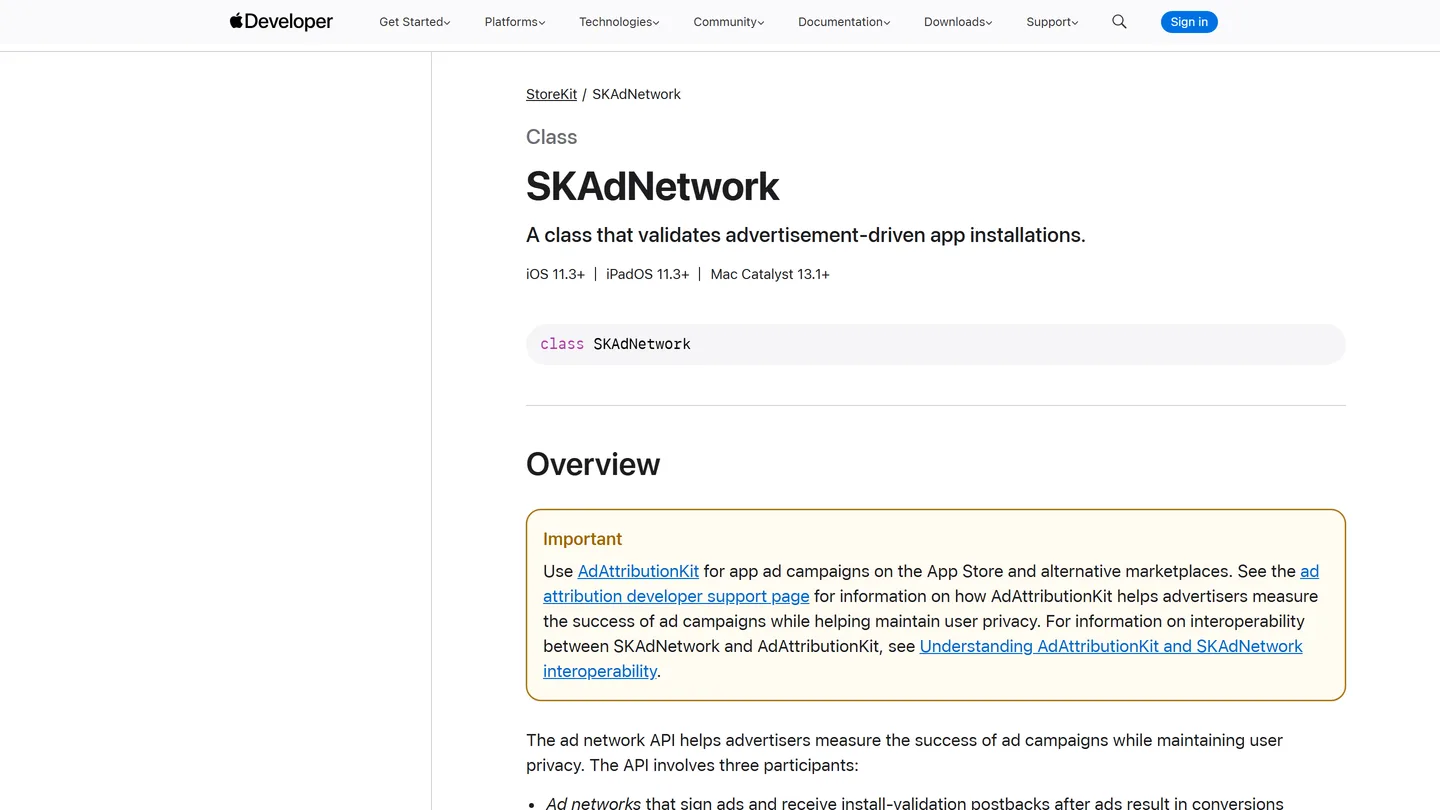
On iOS, device-level attribution is limited by App Tracking Transparency, so MMPs blend these models with Apple’s aggregate frameworks (SKAdNetwork and its successor, AdAttributionKit) to keep reporting complete.
3. Granular Dashboards
Detailed dashboards provide insights into user demographics, behavior patterns, and campaign performance, enabling marketers to optimize strategies effectively.
Why MMPs Are Critical for Mobile Marketing Success
1. Improved User Acquisition
MMPs reveal which marketing channels are most effective at acquiring users, allowing you to refine strategies and better target your audience.
2. Accurate ROI Measurement
Accurately tracking and attributing user actions to specific campaigns helps optimize ad spend for improved returns.
3. Enhanced Fraud Prevention
MMPs protect against mobile ad fraud, ensuring your campaigns are driven by genuine user data.
Combine mobile, web, and CTV data for a full-funnel view, especially when integrated with data-driven ad creative and paid advertising campaigns.
Leading Mobile Measurement Partners in 2026
The MMP category has consolidated around a handful of established platforms. As of 2026, these are the names we see most often in client stacks:
1. AppsFlyer: Comprehensive Analytics
- One of the most widely adopted MMPs, offering advanced analytics and attribution for tracking app installs and user activities.
- Key features: real-time attribution, Protect360 fraud protection, SKAdNetwork and AdAttributionKit support, deep linking.
- See our guide to integrating AppsFlyer for campaign optimization.
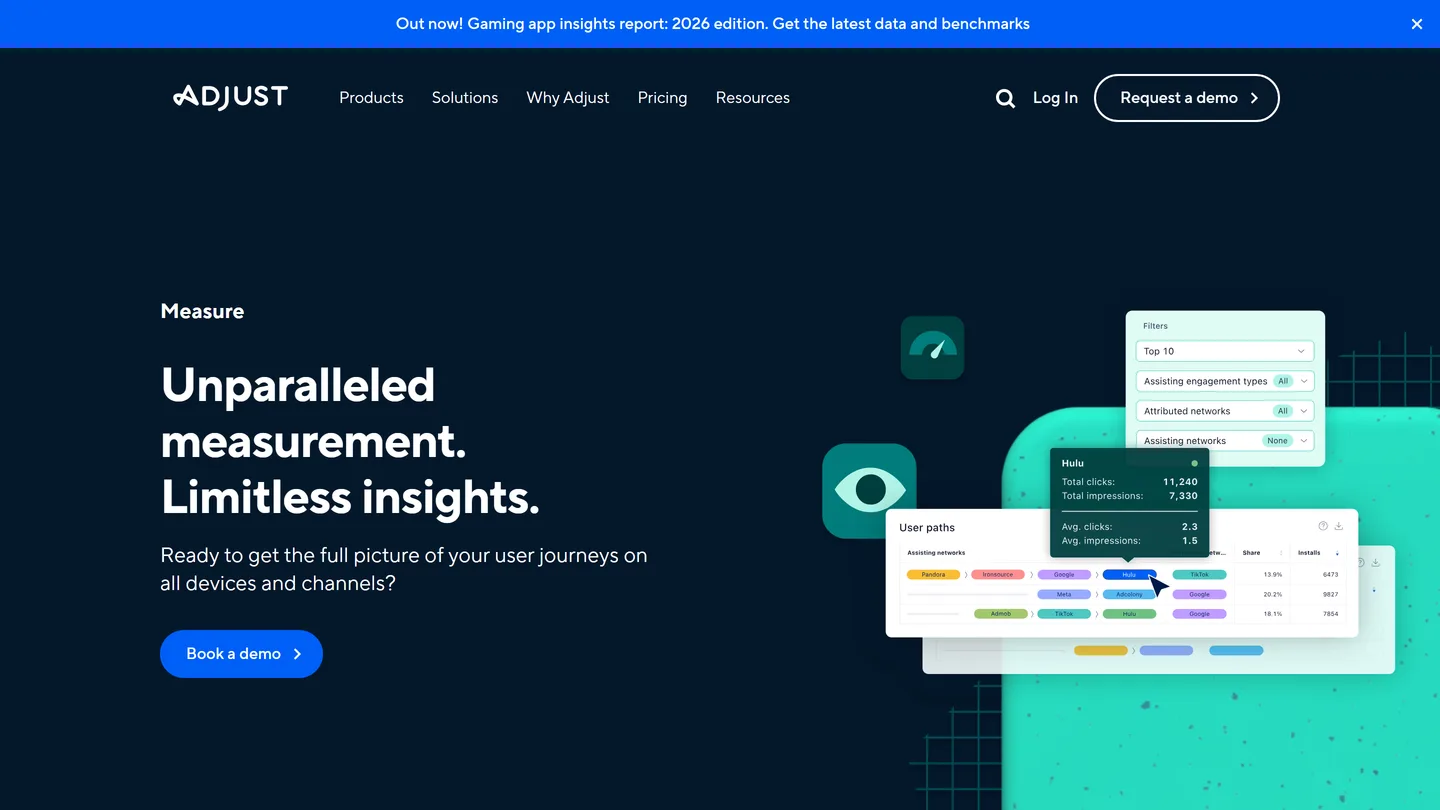
2. Adjust: Precision and Fraud Prevention
- Known for detailed reporting, fraud detection tools, and workflow automation.
- Key features: customizable dashboards, automation for streamlined workflows.
- See our guide to integrating Adjust for campaign optimization.
3. Branch: Focus on Deep Linking
- Specializes in creating seamless user journeys through deep linking.
- Key features: cross-platform consistency, influencer tracking.
4. Singular: Attribution Meets Cost Data
- Combines attribution with marketing cost aggregation, pulling spend data from your ad networks for full-funnel ROI reporting.
- Key features: cost aggregation and ETL, SKAdNetwork and AdAttributionKit support, ad monetization reporting.
5. Kochava: Omni-Channel Attribution
- Provides a unified view of user behavior across mobile, web, and connected TV.
- Key features: identity mapping, third-party data integration.
6. Tenjin: Cost-Effective Analytics
- Ideal for indie studios, startups, and smaller budgets.
- Key features: open-source API, cost reporting tools, free tier to start.
A note on scope: tools like CleverTap (engagement and retention) or Sensor Tower (market intelligence) are often mentioned alongside MMPs, but they solve different problems and complement, rather than replace, the attribution layer.
How to Choose the Right Mobile Measurement Partner
When choosing an MMP, evaluate:
- Business Goals: Define your success metrics (installs, retention, LTV).
- Feature Set: Does it support SKAdNetwork and AdAttributionKit, deep linking, fraud detection, BI exports?
- Integration Complexity: SDK size, API limits, and engineering resources.
- Budget & Scalability: MMP pricing ranges from free tiers to usage-based plans and custom enterprise contracts.
Pro tip: Run a 30-day pilot comparing MMP data against ad network reports before committing.
Emerging Trends in Mobile Measurement
1. AI and Machine Learning
MMPs now use machine learning for predictive analytics, predictive LTV modeling, and automated optimization, identifying high-quality users early in their journey and forecasting behavior so campaigns can be optimized proactively.
2. Privacy-First Measurement Frameworks
The measurement frameworks themselves are in transition. On iOS, Apple is succeeding SKAdNetwork with AdAttributionKit, introduced in iOS 17.4 and expanded through iOS 18.4 with re-engagement attribution and support for alternative app marketplaces; SKAdNetwork still works as of 2026, but AdAttributionKit is Apple’s go-forward framework. On Android, Google retired its Privacy Sandbox initiative in October 2025, including the Attribution Reporting API, so measurement continues to rely on the Play Install Referrer, device identifiers where permitted, and the MMPs’ own aggregated and modeled approaches.
3. Cross-Device and CTV Expansion
As CTV and desktop traffic grow, MMPs are extending attribution across devices to deliver holistic marketing visibility.
FAQ
What is a Mobile Measurement Partner?
A third-party platform that tracks, attributes, and analyzes mobile app user behavior across campaigns, acting as a neutral source of truth between you and your ad networks.
Why do I need an MMP if I already use Google Ads or Meta reporting?
Ad network dashboards show only their own performance, and every network claims as much credit as it can. MMPs unify and deduplicate data from all sources for a neutral, cross-channel view.
Are MMPs compliant with Apple’s privacy rules?
Yes. Modern MMPs like AppsFlyer, Adjust, and Branch are built around App Tracking Transparency and support both SKAdNetwork and its successor, AdAttributionKit.
How much does an MMP cost?
Pricing is mostly usage-based. Free tiers exist (Tenjin, or AppsFlyer’s Zero plan with 12K free conversions in the first year), AppsFlyer’s pay-as-you-go plan runs $0.07 per conversion as of 2026, and enterprise contracts are custom quoted, often reaching five figures per month.
Conclusion
In 2026, Mobile Measurement Partners are essential for any serious app marketer.
Whether you choose AppsFlyer for analytics, Adjust for fraud prevention, or Branch for deep linking, the right MMP can help you drive user acquisition, improve retention, and maximize ROI.
Stay ahead of the competition by leveraging the power of an MMP to deliver data-driven results for your app.
Ready to optimize your mobile marketing strategy? We help clients choose, integrate, and act on the right MMP every day through our paid advertising services.